Marine Upholstery Built for Ohio Water
Boats live a harder life than almost anything else people bring us. Between the sun, the humidity, the freeze-thaw winters we get in southwest Ohio, and the simple wear of getting in and out of a seat every time you're on the water, marine vinyl and foam take a beating that a living room sofa never will. Awad's Upholstery has been repairing and rebuilding boat seats, cushions, and canvas from our shop in Amelia since 1960, and marine work has been part of what we do for as long as we've had the doors open.
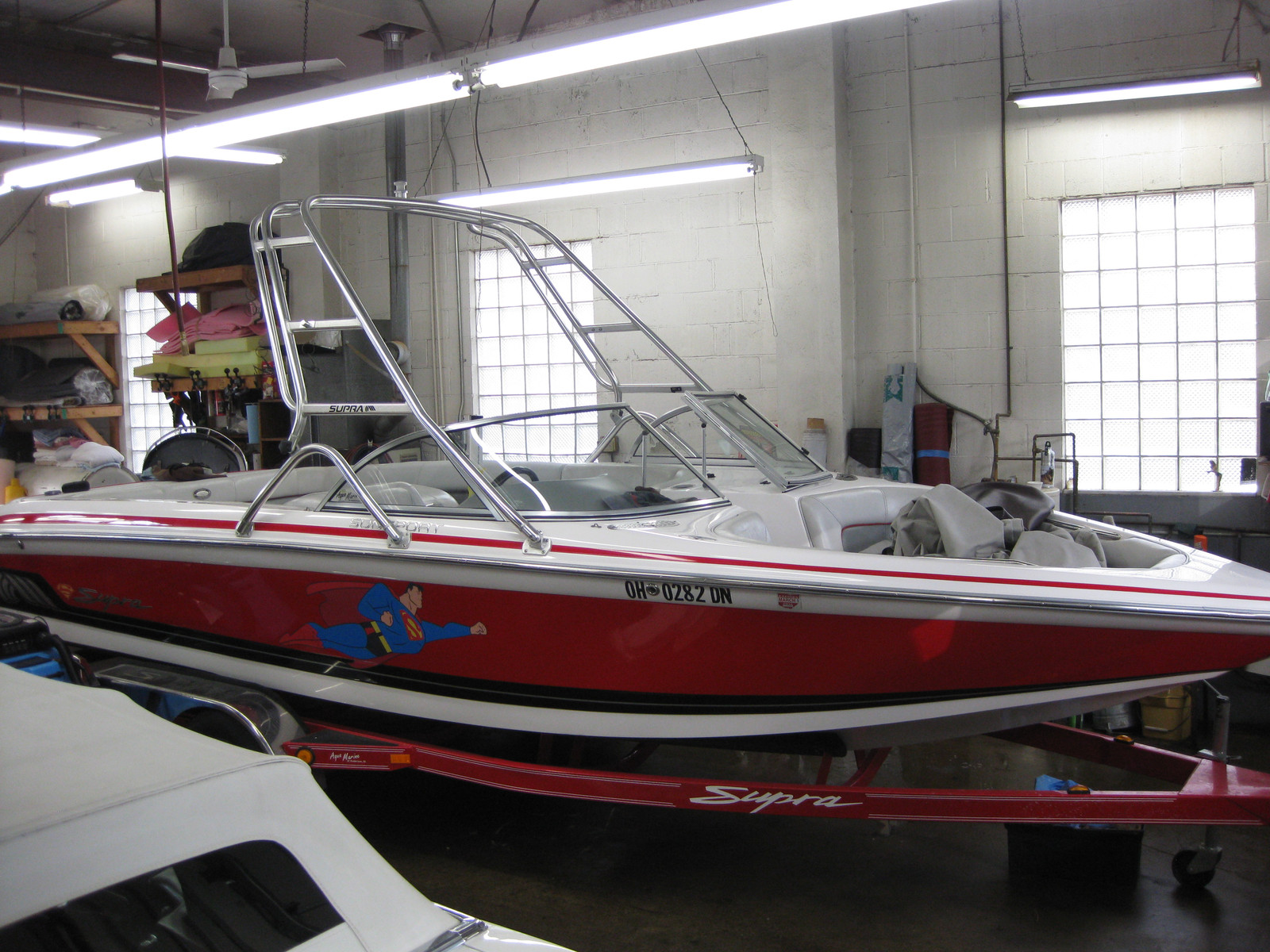
We work on runabouts, pontoons, ski and wakeboard boats, bass boats, deck boats, and jon boats — anything with seats, cushions, or canvas that's worn out, torn, faded, or just outdated. Some jobs are a single torn seat bottom; others are a full interior redo on a boat that's about to go up for sale and needs to look its best. Either way, the work is done in our shop, by hand, using marine-specific materials built to handle sun and water — not general-purpose vinyl pulled from an auto upholstery roll.
Signs Your Boat Needs New Upholstery
Marine vinyl doesn't usually fail all at once — it gives you warning signs for a season or two before a seat is unusable. Most of the boats that come through our shop show a few of these:
- Cracked, peeling, or flaking vinyl on the seat bolsters and bottoms, especially on sun-facing surfaces
- Faded or blotchy color that no longer matches the rest of the boat's interior
- A musty or mildew smell coming from the seats, especially after the boat's been covered for a few days
- Foam that stays damp or waterlogged long after the boat's been out of the water
- Seams splitting along the stitch line, usually where the seat gets the most flexing
- Snaps, zippers, or fasteners on canvas and covers that no longer hold or have rusted out
- An interior that looks tired next to newer boats when you're getting ready to sell
If you're seeing any of these, it's worth having the seat looked at before a small crack turns into a full tear, or before waterlogged foam starts adding weight and odor that's hard to get rid of.
Our Marine Upholstery Process
We keep the process straightforward, whether you're bringing in a single cushion or a full boat:
- Free estimate and inspection. Bring the boat, the seats, or just photos by the shop and we'll look over the material, foam condition, and stitching to give you a straight answer on what it'll take.
- Pattern and material selection. We can match your boat's original color and pattern as closely as possible, or help you pick a new marine vinyl if you want to update the look.
- Foam replacement. Old foam that's compressed, waterlogged, or holding odor gets replaced with closed-cell marine foam that won't soak up water the way standard foam does.
- Cutting and stitching. Every panel is cut and sewn in-house using UV-stabilized thread so the stitching doesn't break down in the sun before the vinyl does.
- Fit, install, and quality check. Seats are fitted back to the boat, snaps and hardware are checked, and everything gets a final look before it goes back to you.
Turnaround varies with the size of the job and the time of year — spring, right before boating season kicks off, is our busiest stretch for marine work, so it's worth calling ahead if you're hoping to be back on the water by a certain date.
Materials We Use for Marine Work
Marine-Grade Vinyl
Marine vinyl isn't the same material used in auto interiors or outdoor furniture. It's built with UV inhibitors to resist sun fading and cracking, and treated to resist mildew and salt exposure. That's the difference between a seat that looks good for one season and one that holds its color and flexibility for years of Ohio summers.
Closed-Cell Foam That Won't Hold Water
Standard upholstery foam acts like a sponge once it's wet — it holds water, adds weight, and starts to smell. Closed-cell marine foam is designed specifically to resist water absorption, so a seat that gets rained on or splashed dries out instead of staying soggy for days.
Canvas, Snaps & Zippers
For biminis, boat covers, and canvas work, we use solution-dyed marine canvas that resists fading from the inside out rather than just on the surface coating, paired with corrosion-resistant snaps and zippers so the hardware doesn't become the weak point.
Bimini Tops, Boat Covers & Snap-In Carpet
Marine upholstery isn't just seats. We also repair and replace bimini tops, boat covers, and pontoon camper canvas, and we handle snap-in carpet replacement for boats where the flooring has worn through or started to mildew. If the canvas frame itself needs adjustment along with new fabric, we can take care of that as part of the same visit.
Why Boaters Across Greater Cincinnati Choose Awad's Upholstery
We've been a family-owned shop on the same stretch of St. Rt. 132 since 1960, and marine work stays in-house from start to finish — we don't ship seats out of state or hand the job to a subcontractor. That means we can talk through pattern and material choices with you directly, and it means the person cutting and sewing your seats has the same standards we've held for over six decades. Free estimates and walk-ins are always welcome, whether you need one cushion patched before a weekend trip or a full interior planned out over the winter.
Serving Boaters From the Ohio River to East Fork Lake
Our shop in Amelia sits close to the water that keeps this area busy all summer — the Ohio River through Cincinnati and New Richmond, East Fork Lake State Park, and the lakes and rivers across Clermont County. We see a steady mix of boats each spring getting commissioned for the season and again in the fall as owners prep for winter storage, and we're set up to handle both the rush before Memorial Day and the slower repair work in the off-season.
Boaters come to us from well beyond Amelia itself — Batavia, Milford, Anderson Township, and drivers making the trip in from the east side of Cincinnati all bring boats through our doors, usually on a recommendation from someone whose seats we've already redone. A lot of our marine customers end up becoming repeat customers for auto and top work too, once they see the same standard applied to their car or truck.
Caring for Your Boat Seats Between Services
A little maintenance goes a long way toward getting more seasons out of a marine vinyl job. Rinsing seats with fresh water after saltier or heavily chlorinated exposure, keeping a breathable cover on the boat during long stretches of storage instead of a tight plastic tarp that traps moisture, and wiping down vinyl with a marine-safe cleaner rather than household soap all help slow down the fading and cracking that eventually brings a boat back through our doors. If you're not sure what's safe to use on your specific vinyl, it's a quick question to ask next time you're in the shop.